Four mangrove species frame the estuary — red mangrove at the water edge, black mangrove on intertidal mudflats, white mangrove mid-estuary, buttonwood on the inland fringe. Behind them, a dry tropical forest with over 670 documented plant species.
670+ species documented within 50 km
Mangroves, dry forest, beach, and dune species — the photo field guide.
Plants you'll meet, by habitat
Mangroves (the estuary's framework)
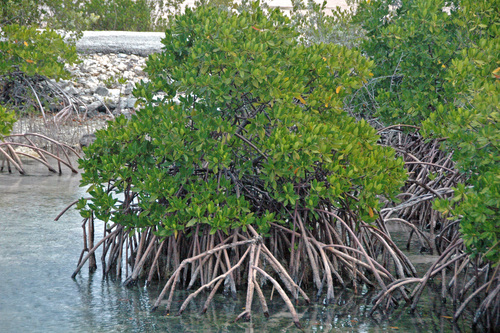 Mangle rojo
Red Mangrove
Rhizophora mangle details →
Prop roots, the front line
Mangle rojo
Red Mangrove
Rhizophora mangle details →
Prop roots, the front line
 Mangle negro
Black Mangrove
Avicennia germinans details →
Pneumatophores, salt-tolerant
Mangle negro
Black Mangrove
Avicennia germinans details →
Pneumatophores, salt-tolerant
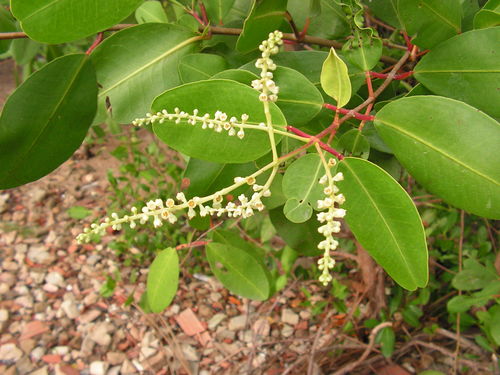 Mangle blanco
White Mangrove
Laguncularia racemosa details →
Inner zones
Mangle blanco
White Mangrove
Laguncularia racemosa details →
Inner zones
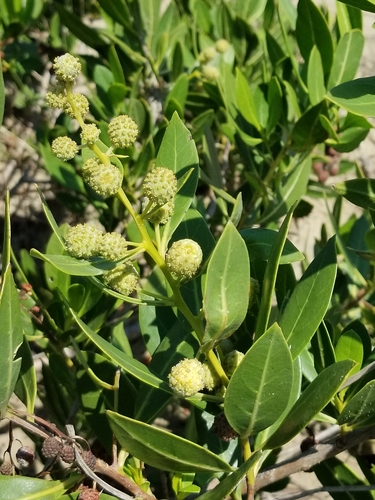 Mangle botoncillo
Buttonwood
Conocarpus erectus details →
Transition zone, drier
Mangle botoncillo
Buttonwood
Conocarpus erectus details →
Transition zone, drier
Dry tropical forest trees
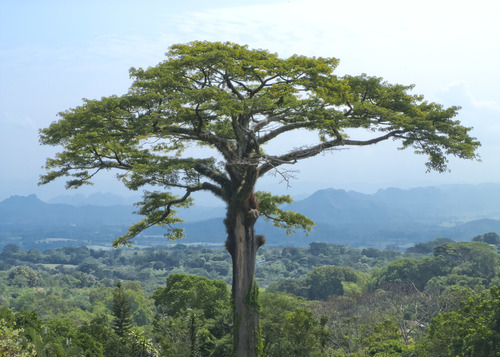
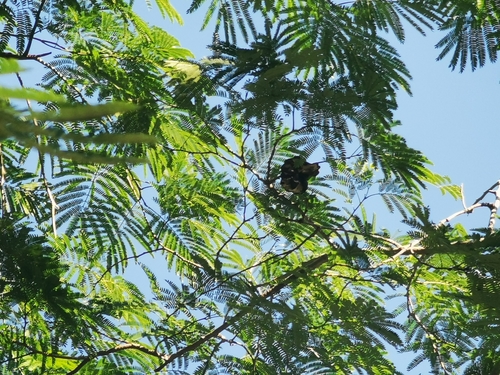 Guanacaste
 / Earpod Tree
Enterolobium cyclocarpum details →
Massive crown, signature tree
Guanacaste
Guanacaste / Earpod Tree
Enterolobium cyclocarpum details →
Massive crown, signature tree
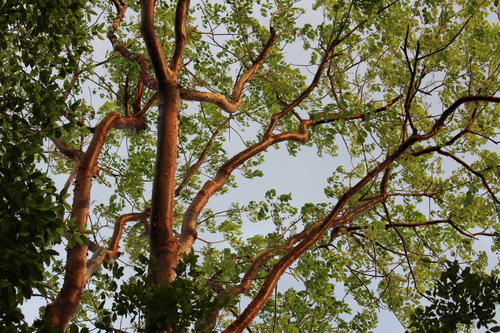 Palo mulato
Gumbo Limbo
Bursera simaruba details →
Peeling red bark
Palo mulato
Gumbo Limbo
Bursera simaruba details →
Peeling red bark
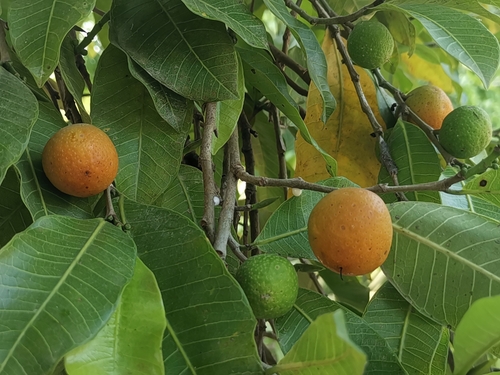 Ramón / Capomo
Breadnut
Brosimum alicastrum details →
Maya staple, edible seeds
Ramón / Capomo
Breadnut
Brosimum alicastrum details →
Maya staple, edible seeds
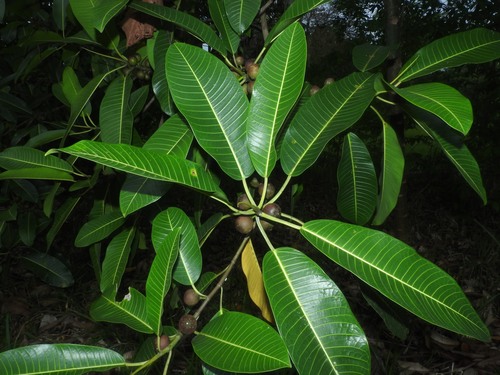 Higuera
Wild Fig
Ficus insipida details →
Strangler, food for wildlife
Medicinal use: Latex applied topically for warts and skin lesions; latex is caustic — not for internal use. Part used: latex. (UNAM Atlas PMTM)
Higuera
Wild Fig
Ficus insipida details →
Strangler, food for wildlife
Medicinal use: Latex applied topically for warts and skin lesions; latex is caustic — not for internal use. Part used: latex. (UNAM Atlas PMTM)
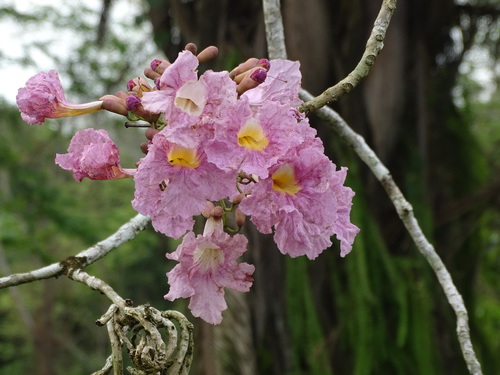 Roble de sabana
Pink Trumpet Tree
Tabebuia rosea details →
Spectacular dry-season bloom
Roble de sabana
Pink Trumpet Tree
Tabebuia rosea details →
Spectacular dry-season bloom
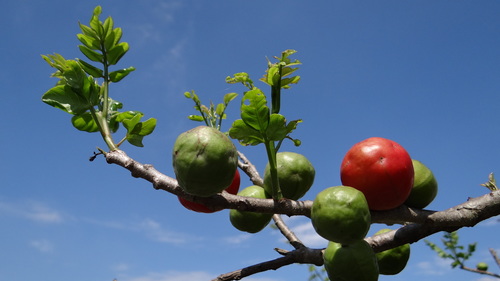 Ciruela mexicana
Mexican Plum
Spondias purpurea details →
Edible fruit, common in villages
Ciruela mexicana
Mexican Plum
Spondias purpurea details →
Edible fruit, common in villages
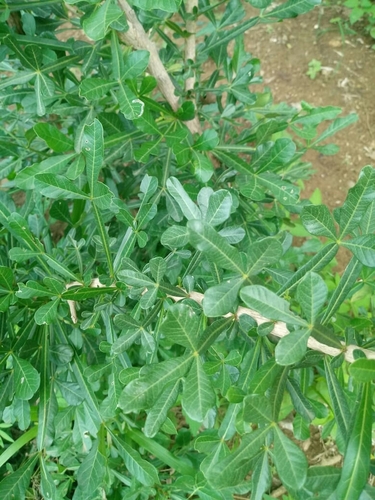 Jícaro
Jicaro Tree
Crescentia alata details →
Calabash gourds from trunk
Jícaro
Jicaro Tree
Crescentia alata details →
Calabash gourds from trunk
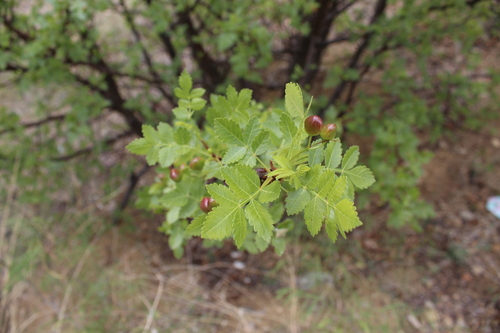 Copal limón
Lime Copal
Bursera linanoe
Citrus-scented resin, dry forest
Medicinal use: Resin burned as copal incense in ritual cleansing; applied topically as an antiseptic on wounds. Parts used: resin. Nahua and Mixtec traditional medicine.
Copal limón
Lime Copal
Bursera linanoe
Citrus-scented resin, dry forest
Medicinal use: Resin burned as copal incense in ritual cleansing; applied topically as an antiseptic on wounds. Parts used: resin. Nahua and Mixtec traditional medicine.
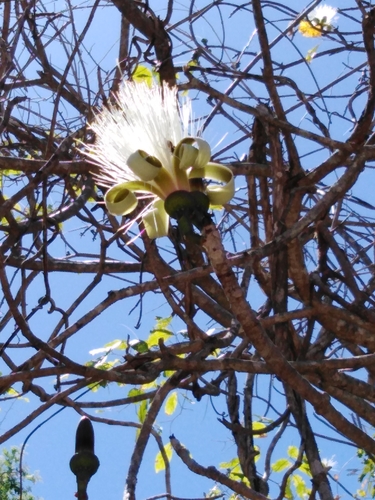 Copal blanco
White Copal
Bursera fagaroides
Papery white bark, Bursera family
Medicinal use: Resin used as antiseptic wound dressing and burned as ritual incense. Part used: resin. Nahua traditional medicine.
Copal blanco
White Copal
Bursera fagaroides
Papery white bark, Bursera family
Medicinal use: Resin used as antiseptic wound dressing and burned as ritual incense. Part used: resin. Nahua traditional medicine.
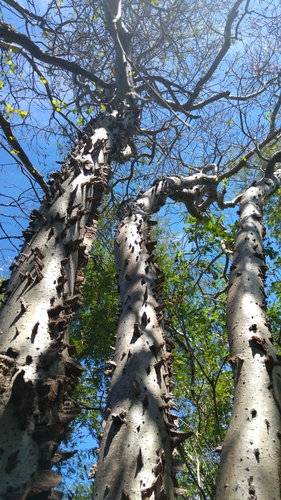 Pochote
 / Dry-forest Ceiba
Ceiba aesculifolia
Spiny trunk, cotton-like seeds
Pochote
Pochote / Dry-forest Ceiba
Ceiba aesculifolia
Spiny trunk, cotton-like seeds
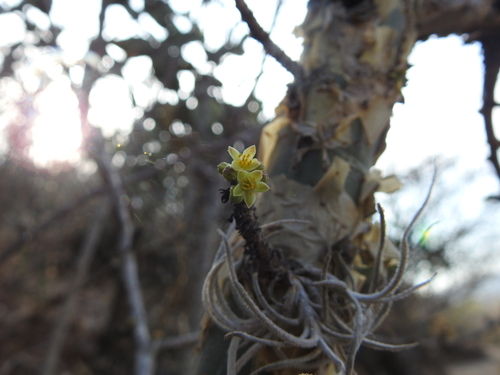 Pochote
Palmer's Bombax
Pseudobombax palmeri
Spectacular dry-season flowers
Pochote
Palmer's Bombax
Pseudobombax palmeri
Spectacular dry-season flowers
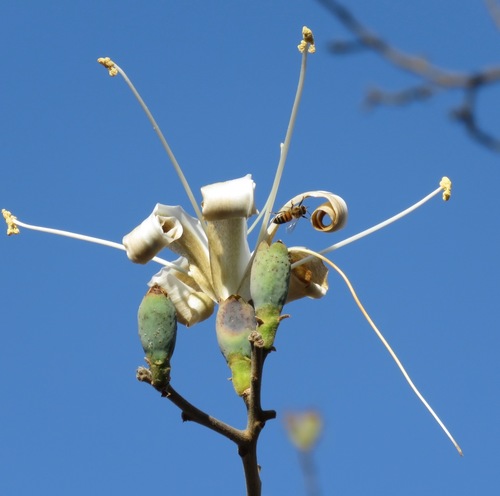 Cuachalalate
Amphipterygium adstringens
Medicinal bark, endemic Mexico
Medicinal use: Bark decoction traditionally used for gastric ulcers, wound healing, and as an antiseptic. Part used: bark. (UNAM Atlas de las Plantas de la Medicina Tradicional Mexicana)
Cuachalalate
Cuachalalate
Amphipterygium adstringens
Medicinal bark, endemic Mexico
Medicinal use: Bark decoction traditionally used for gastric ulcers, wound healing, and as an antiseptic. Part used: bark. (UNAM Atlas de las Plantas de la Medicina Tradicional Mexicana)
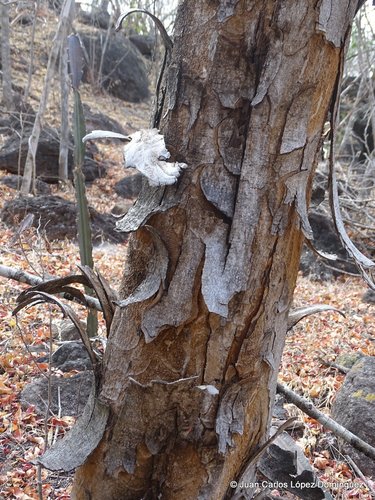 Tepehuaje
Lysiloma divaricatum
Dominant dry-forest legume
Medicinal use: Bark decoction traditionally used for diarrhea and skin inflammations. Part used: bark. (UNAM Atlas PMTM)
Tepehuaje
Tepehuaje
Lysiloma divaricatum
Dominant dry-forest legume
Medicinal use: Bark decoction traditionally used for diarrhea and skin inflammations. Part used: bark. (UNAM Atlas PMTM)
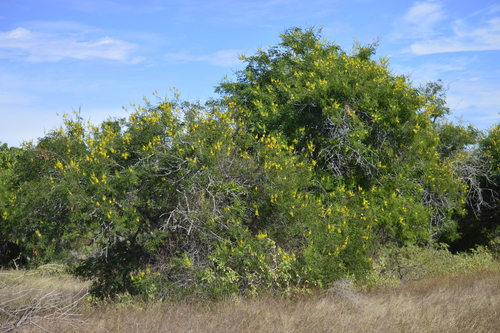 Cubata
 / Boat-spine Acacia
Acacia cochliacantha
Thorny scrub, nitrogen fixer
Cubata
Cubata / Boat-spine Acacia
Acacia cochliacantha
Thorny scrub, nitrogen fixer
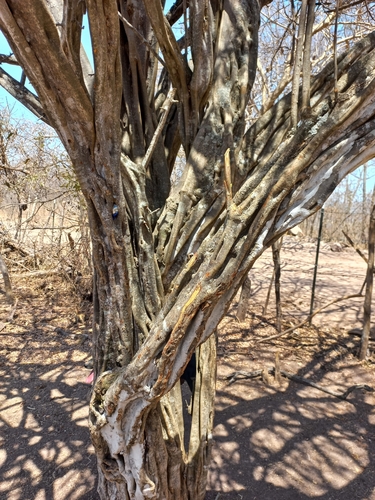 Cascalote
Caesalpinia cacalaco
Yellow flowers, tanning bark
Cascalote
Cascalote
Caesalpinia cacalaco
Yellow flowers, tanning bark
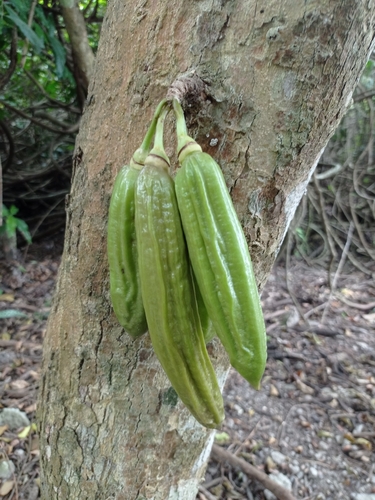 Cuajilote
Parmentiera aculeata
Edible fruits grow from trunk
Medicinal use: Fruit and bark decoction traditionally used for diabetes management and kidney health. Parts used: fruit, bark. (UNAM Atlas PMTM)
Cuajilote
Cuajilote
Parmentiera aculeata
Edible fruits grow from trunk
Medicinal use: Fruit and bark decoction traditionally used for diabetes management and kidney health. Parts used: fruit, bark. (UNAM Atlas PMTM)
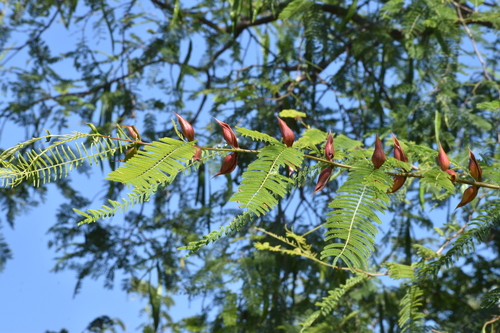 Palo de brasil
Brasiletto / Mexican Logwood
Haematoxylum brasiletto
Red heartwood, dye tree
Medicinal use: Bark and heartwood decoction traditionally used as a blood purifier and for liver complaints. Part used: heartwood, bark. (UNAM Atlas PMTM)
Palo de brasil
Brasiletto / Mexican Logwood
Haematoxylum brasiletto
Red heartwood, dye tree
Medicinal use: Bark and heartwood decoction traditionally used as a blood purifier and for liver complaints. Part used: heartwood, bark. (UNAM Atlas PMTM)
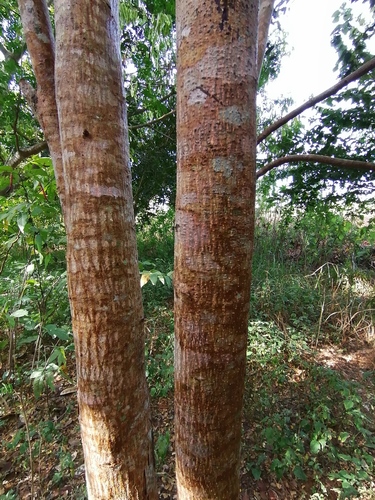 Hule
Panama Rubber Tree
Castilla elastica
Pre-Columbian rubber source
Medicinal use: Latex traditionally applied topically as an anti-inflammatory for joint pain and skin conditions. Part used: latex. (UNAM Atlas PMTM)
Hule
Panama Rubber Tree
Castilla elastica
Pre-Columbian rubber source
Medicinal use: Latex traditionally applied topically as an anti-inflammatory for joint pain and skin conditions. Part used: latex. (UNAM Atlas PMTM)
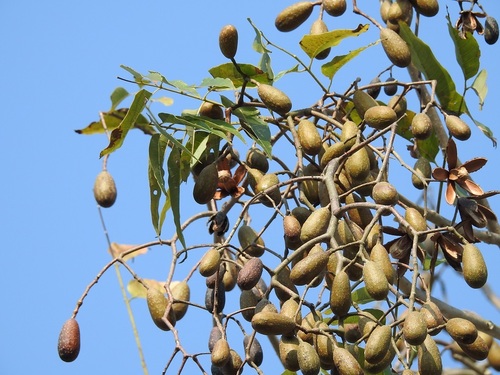 Caoba
Pacific Coast Mahogany
Swietenia humilis
IUCN Endangered · prized timber
Caoba
Pacific Coast Mahogany
Swietenia humilis
IUCN Endangered · prized timber
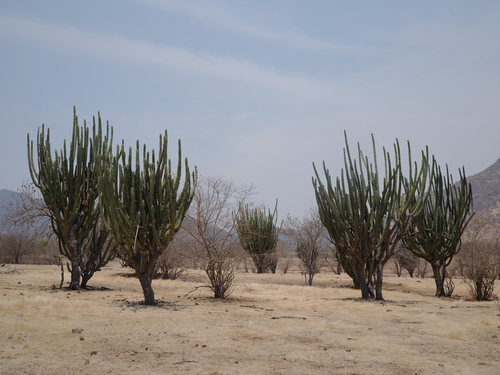 Cedro rojo
Spanish Cedar
Cedrela odorata
IUCN Vulnerable · aromatic wood
Cedro rojo
Spanish Cedar
Cedrela odorata
IUCN Vulnerable · aromatic wood
Beach & dune
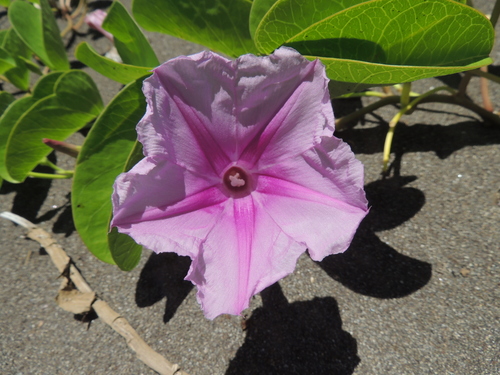 Riñonina
Beach Morning Glory
Ipomoea pes-caprae
Pioneer, holds dune sand
Riñonina
Beach Morning Glory
Ipomoea pes-caprae
Pioneer, holds dune sand
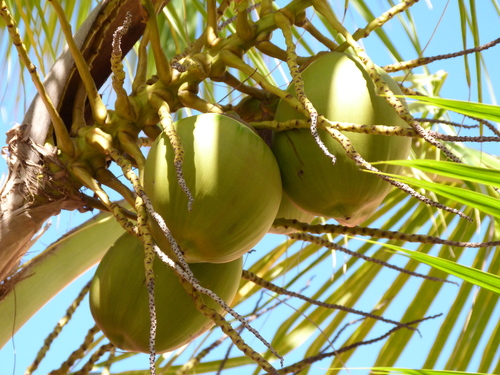 Cocotero
Coconut Palm
Cocos nucifera details →
Iconic; widely planted
Cocotero
Coconut Palm
Cocos nucifera details →
Iconic; widely planted
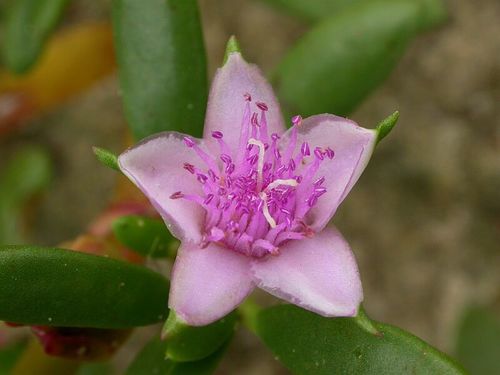 Verdolaga marina
Sea Purslane
Sesuvium portulacastrum details →
Salt-tolerant succulent
Verdolaga marina
Sea Purslane
Sesuvium portulacastrum details →
Salt-tolerant succulent
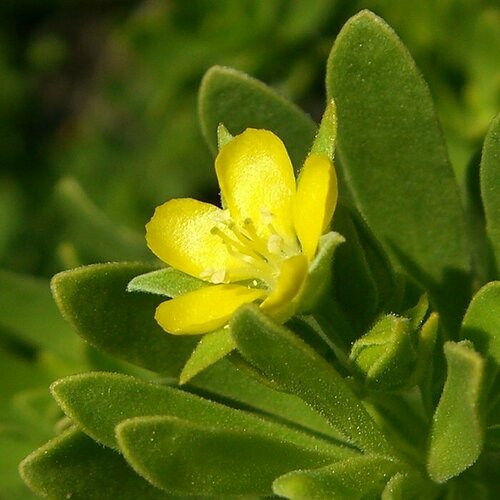 Cuabilla
Bay Cedar
Suriana maritima details →
Shrub, dune backbone
Cuabilla
Bay Cedar
Suriana maritima details →
Shrub, dune backbone
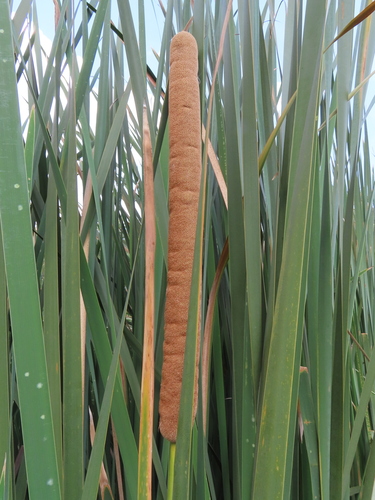 Uva de mar
Sea Grape
Coccoloba uvifera
Rounds leaves, edible fruit
Uva de mar
Sea Grape
Coccoloba uvifera
Rounds leaves, edible fruit
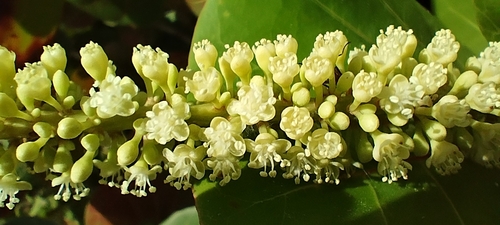 Almendro de playa
Sea Almond / Tropical Almond
Terminalia catappa
Tiered canopy, beach shade tree
Almendro de playa
Sea Almond / Tropical Almond
Terminalia catappa
Tiered canopy, beach shade tree
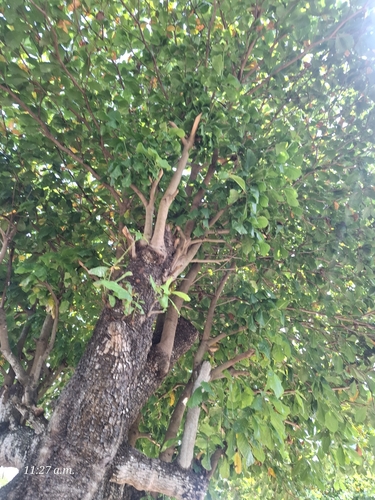 Majagua
Sea Hibiscus / Coastal Cottonwood
Hibiscus tiliaceus
Yellow flowers, coastal scrub
Majagua
Sea Hibiscus / Coastal Cottonwood
Hibiscus tiliaceus
Yellow flowers, coastal scrub
Cacti & succulents
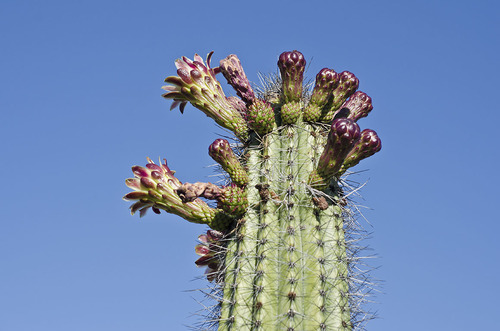 Pitahaya / Pitayo
Organ Pipe Cactus
Stenocereus thurberi details →
Tall columnar, edible fruit
Pitahaya / Pitayo
Organ Pipe Cactus
Stenocereus thurberi details →
Tall columnar, edible fruit
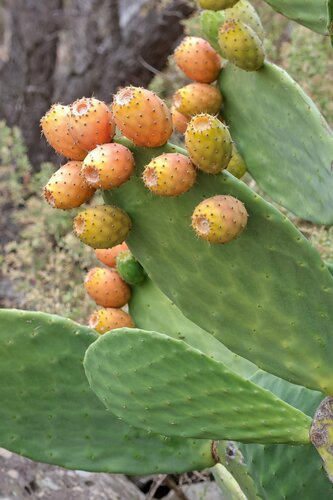 Nopal
Prickly Pear
Opuntia ficus-indica
Edible pads and tuna fruit
Nopal
Prickly Pear
Opuntia ficus-indica
Edible pads and tuna fruit
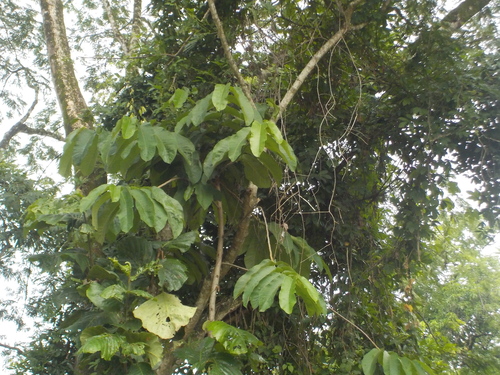 Pitayo
Quevedó's Pitayo
Stenocereus quevedonis
Columnar, Guerrero endemic
Pitayo
Quevedó's Pitayo
Stenocereus quevedonis
Columnar, Guerrero endemic
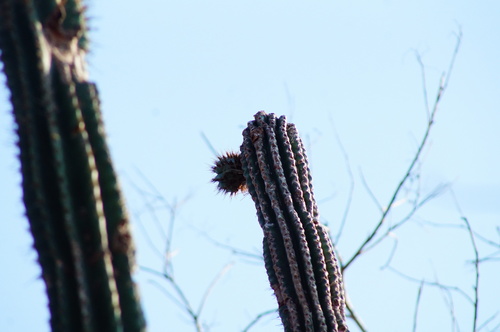 Cardón / Órgano
Hairbrush Cactus
Pachycereus pecten-aboriginum
Tall columnar, dry slopes
Cardón / Órgano
Hairbrush Cactus
Pachycereus pecten-aboriginum
Tall columnar, dry slopes
Lagoon edge & freshwater
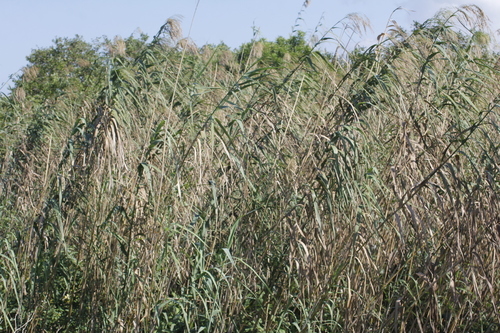 Carrizo
Common Reed
Phragmites australis
Tall reed, lagoon margins
Carrizo
Common Reed
Phragmites australis
Tall reed, lagoon margins
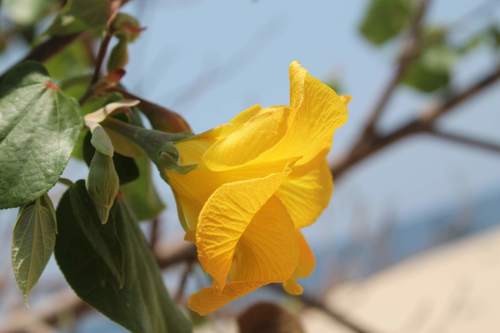 Tule
Southern Cattail
Typha domingensis
Cattail, wetland indicator
Tule
Southern Cattail
Typha domingensis
Cattail, wetland indicator
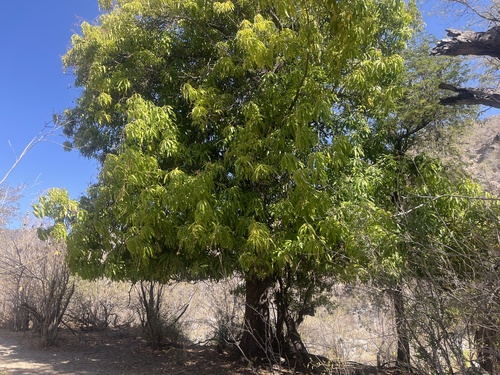 Lirio acuático
Water Hyacinth
Eichhornia crassipes
Invasive — can block lagoon flow
Lirio acuático
Water Hyacinth
Eichhornia crassipes
Invasive — can block lagoon flow
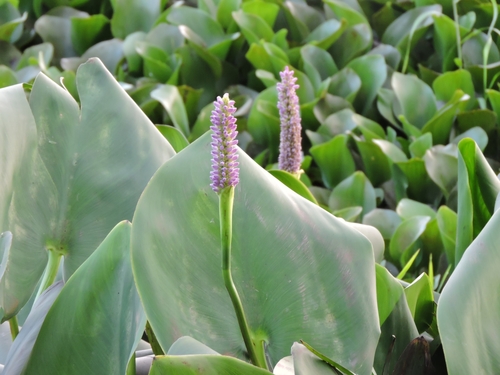 Pico de gallo acuático
Pickerelweed
Pontederia cordata
Purple flowers, shallow water
Pico de gallo acuático
Pickerelweed
Pontederia cordata
Purple flowers, shallow water
Culturally important
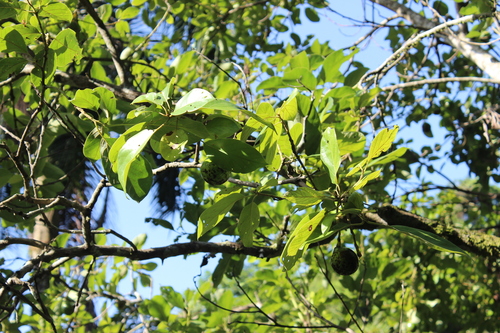 Aguacate
Avocado
Persea americana
Native to Mexico, village staple
Aguacate
Avocado
Persea americana
Native to Mexico, village staple
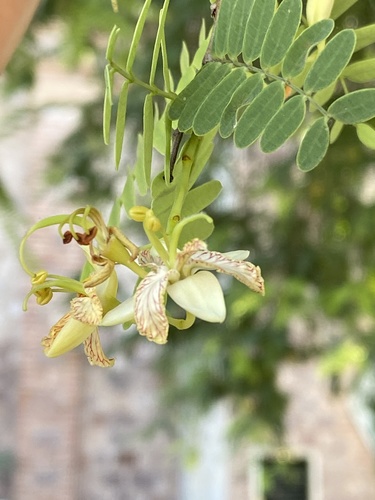 Mango
Mango
Mangifera indica
Everywhere Jun–Aug at Saladita
Mango
Mango
Mangifera indica
Everywhere Jun–Aug at Saladita
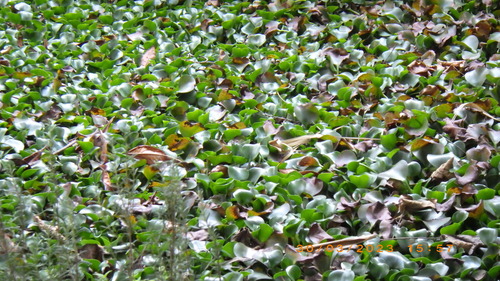 Tamarindo
Tamarind
Tamarindus indica
Sour pods, agua fresca base
Medicinal use: Pulp traditionally used as a mild laxative and fever reducer; also astringent for sore throats. Part used: fruit pulp. Widely documented across Mexican traditional medicine.
Tamarindo
Tamarind
Tamarindus indica
Sour pods, agua fresca base
Medicinal use: Pulp traditionally used as a mild laxative and fever reducer; also astringent for sore throats. Part used: fruit pulp. Widely documented across Mexican traditional medicine.
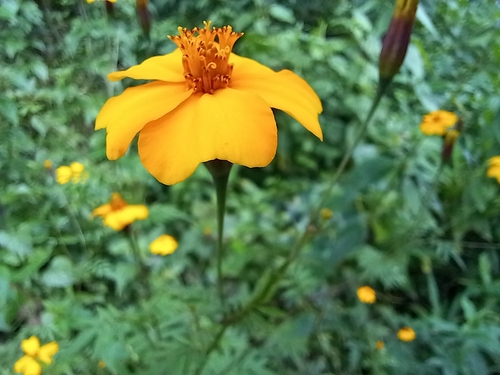 Plátano / Banana
Banana / Plantain
Musa spp
Grown in every village garden
Plátano / Banana
Banana / Plantain
Musa spp
Grown in every village garden
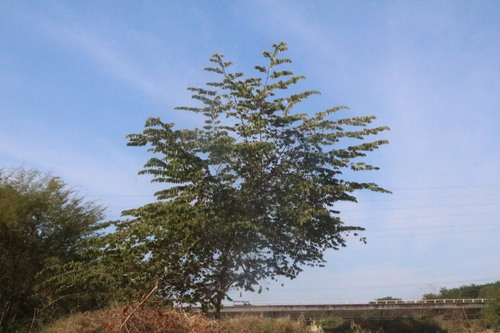 Papaya
Carica papaya
Fast-growing, fruiting year-round
Medicinal use: Unripe fruit and leaves traditionally used as a digestive aid (papain enzyme); seed decoction for intestinal parasites. Parts used: unripe fruit, seeds, leaves. Widely used across Mexican Pacific coast communities.
Papaya
Papaya
Carica papaya
Fast-growing, fruiting year-round
Medicinal use: Unripe fruit and leaves traditionally used as a digestive aid (papain enzyme); seed decoction for intestinal parasites. Parts used: unripe fruit, seeds, leaves. Widely used across Mexican Pacific coast communities.
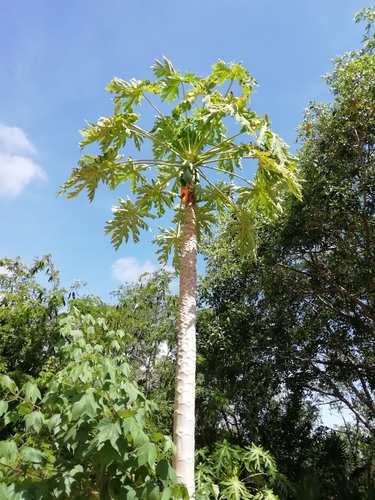
 Anona / Saramuyo
Sugar Apple / Custard Apple
Annona squamosa
Sweet custard fruit, sold locally
Medicinal use: Seed powder and leaf decoction traditionally used as an antiparasitic for intestinal worms. Parts used: seeds, leaves. ⚠ Seeds are toxic if ingested whole. (UNAM Atlas PMTM)
Anona / Saramuyo
Sugar Apple / Custard Apple
Annona squamosa
Sweet custard fruit, sold locally
Medicinal use: Seed powder and leaf decoction traditionally used as an antiparasitic for intestinal worms. Parts used: seeds, leaves. ⚠ Seeds are toxic if ingested whole. (UNAM Atlas PMTM)
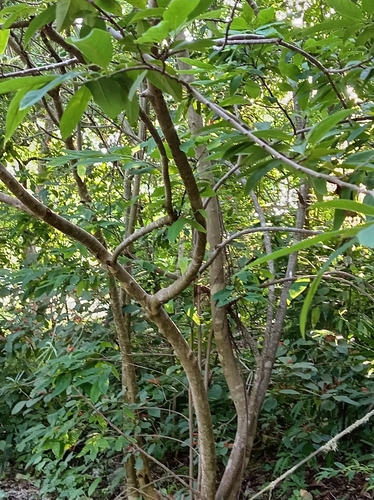
 Capulín / Nanche de Castilla
Jamaican Cherry
Muntingia calabura
Small red berries, loved by birds
Capulín / Nanche de Castilla
Jamaican Cherry
Muntingia calabura
Small red berries, loved by birds
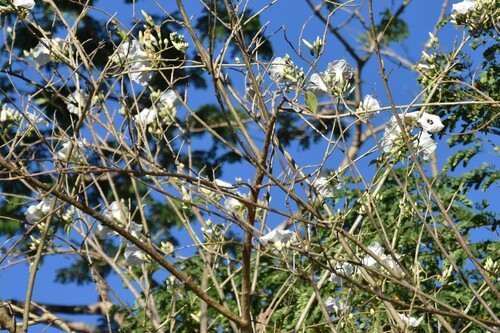
 Cazahuate
 / Morning Glory Tree
Ipomoea wolcottiana
White flowers, dry-season spectacle
Medicinal use: Root decoction traditionally used as a diuretic and for kidney support. Part used: root. (UNAM Atlas PMTM)
Cazahuate
Cazahuate / Morning Glory Tree
Ipomoea wolcottiana
White flowers, dry-season spectacle
Medicinal use: Root decoction traditionally used as a diuretic and for kidney support. Part used: root. (UNAM Atlas PMTM)
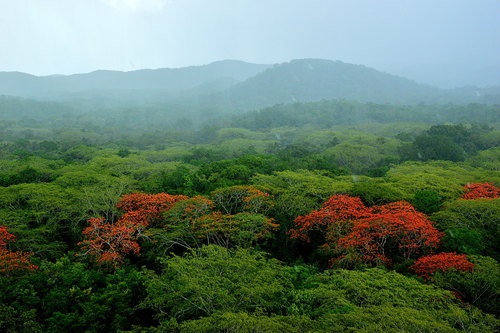 Tabachín / Flamboyán
Flamboyant / Royal Poinciana
Delonix regia
Scarlet canopy, dry-season marker
Tabachín / Flamboyán
Flamboyant / Royal Poinciana
Delonix regia
Scarlet canopy, dry-season marker
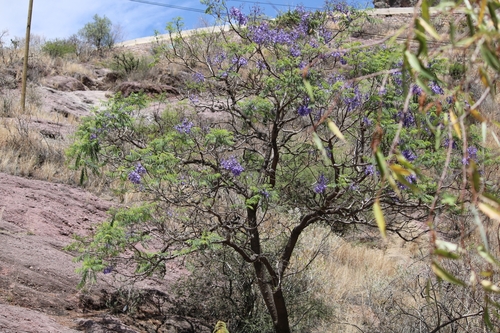 Jacaranda
Jacaranda mimosifolia
Purple bloom, planted in towns
Jacaranda
Jacaranda
Jacaranda mimosifolia
Purple bloom, planted in towns
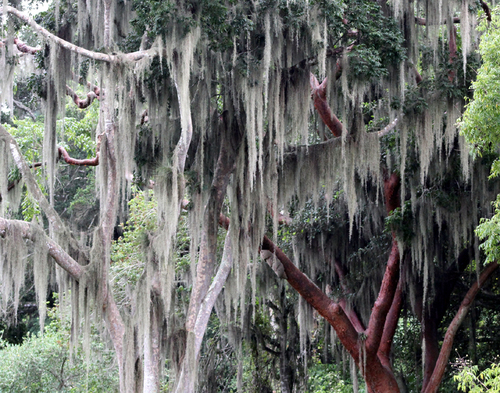 Heno / Paxtle
Spanish Moss
Tillandsia usneoides
Epiphytic bromeliad, drapes trees
Heno / Paxtle
Spanish Moss
Tillandsia usneoides
Epiphytic bromeliad, drapes trees
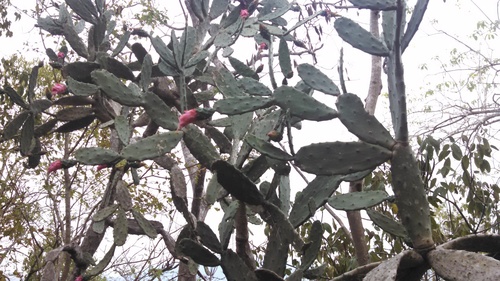 Bromelia / Gallito
Air Plant / Tillandsia
Tillandsia spp
Epiphyte on dry-forest trees
Bromelia / Gallito
Air Plant / Tillandsia
Tillandsia spp
Epiphyte on dry-forest trees
Flowering & iconic
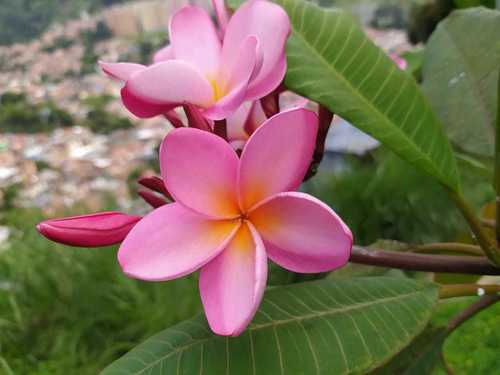 Cacaloxóchitl / Flor de mayo
Frangipani / Plumeria
Plumeria rubra details →
Sacred, fragrant flowers
Medicinal use: Flower infusion traditionally used as a mild laxative. ⚠ Milky latex is caustic — keep off skin and eyes; not for internal use. Parts used: flowers. Nahua traditional medicine.
Cacaloxóchitl / Flor de mayo
Frangipani / Plumeria
Plumeria rubra details →
Sacred, fragrant flowers
Medicinal use: Flower infusion traditionally used as a mild laxative. ⚠ Milky latex is caustic — keep off skin and eyes; not for internal use. Parts used: flowers. Nahua traditional medicine.
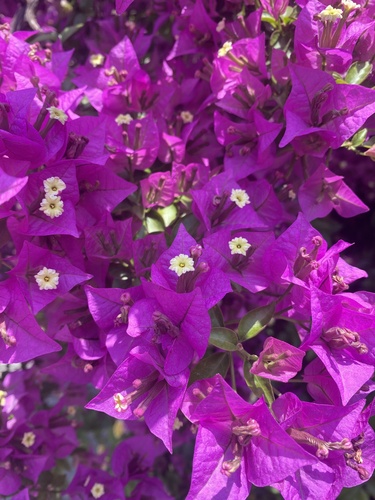 Bugambilia
Bougainvillea
Bougainvillea spectabilis details →
Ubiquitous in Mexican villages
Bugambilia
Bougainvillea
Bougainvillea spectabilis details →
Ubiquitous in Mexican villages
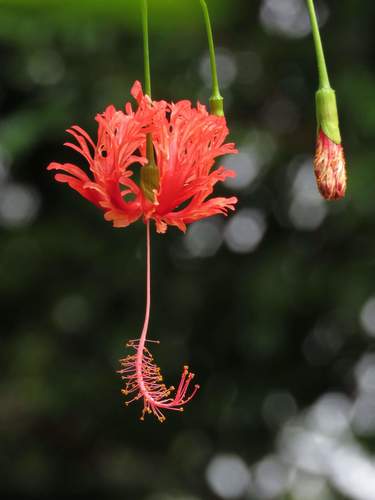 Tulipán / Obelisco
Hibiscus
Hibiscus rosa-sinensis
Common ornamental, edible
Tulipán / Obelisco
Hibiscus
Hibiscus rosa-sinensis
Common ornamental, edible
Medicinal & ethnobotanical
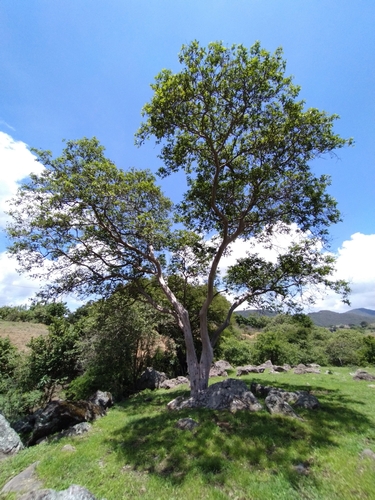 Guayaba
Guava
Psidium guajava
Edible fruit, common in gardens
Medicinal use: Leaf decoction traditionally used for diarrhea and gastroenteritis; antibacterial properties documented in published research. Part used: leaves. (UNAM Atlas PMTM)
Guayaba
Guava
Psidium guajava
Edible fruit, common in gardens
Medicinal use: Leaf decoction traditionally used for diarrhea and gastroenteritis; antibacterial properties documented in published research. Part used: leaves. (UNAM Atlas PMTM)
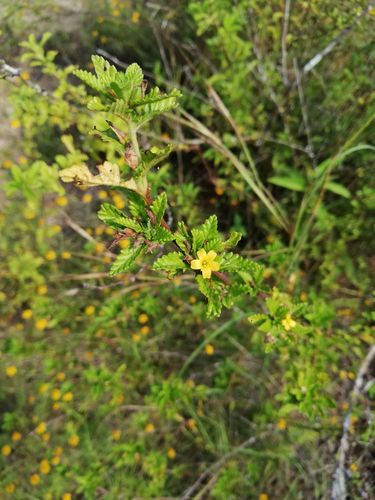 Damiana
Turnera diffusa
Dry-forest shrub, yellow flowers
Medicinal use: Leaf tea traditionally used as an anxiolytic, mild mood elevator, and aphrodisiac along the Pacific coast and Baja California. Part used: leaves. (UNAM Atlas PMTM)
Damiana
Damiana
Turnera diffusa
Dry-forest shrub, yellow flowers
Medicinal use: Leaf tea traditionally used as an anxiolytic, mild mood elevator, and aphrodisiac along the Pacific coast and Baja California. Part used: leaves. (UNAM Atlas PMTM)
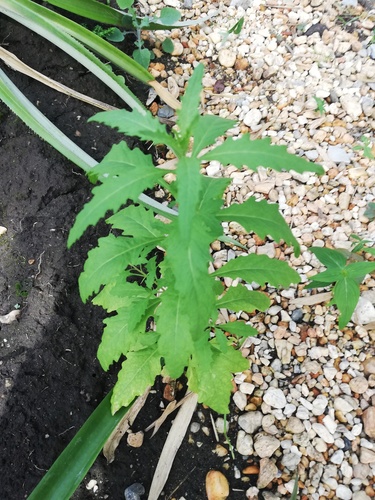 Epazote
 / Mexican Tea
Dysphania ambrosioides
Culinary herb, grows in village gardens
Medicinal use: Leaf tea traditionally used as an antiparasitic for intestinal worms; added to bean dishes to reduce flatulence. Part used: leaves. ⚠ Large doses are toxic. Nahua and Mixtec traditional medicine.
Epazote
Epazote / Mexican Tea
Dysphania ambrosioides
Culinary herb, grows in village gardens
Medicinal use: Leaf tea traditionally used as an antiparasitic for intestinal worms; added to bean dishes to reduce flatulence. Part used: leaves. ⚠ Large doses are toxic. Nahua and Mixtec traditional medicine.
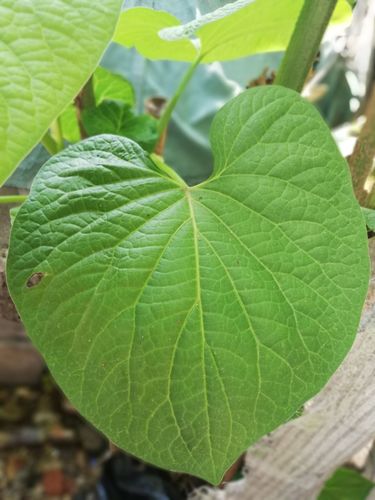 Hoja santa / Hierba santa
Holy Leaf / Root Beer Plant
Piper auritum
Large fragrant leaves, wet margins
Medicinal use: Leaf poultice traditionally applied for skin infections and fevers; antimicrobial properties. Also widely used as a culinary wrap for tamales and fish. Part used: leaves. (UNAM Atlas PMTM)
Hoja santa / Hierba santa
Holy Leaf / Root Beer Plant
Piper auritum
Large fragrant leaves, wet margins
Medicinal use: Leaf poultice traditionally applied for skin infections and fevers; antimicrobial properties. Also widely used as a culinary wrap for tamales and fish. Part used: leaves. (UNAM Atlas PMTM)
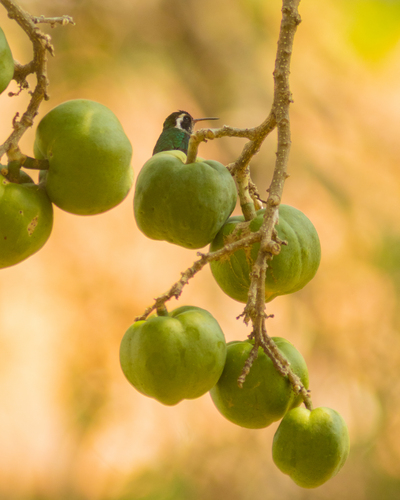 Zapote blanco
White Sapote / Mexican Sleep Apple
Casimiroa edulis
White fruit, planted in villages
Medicinal use: Leaf decoction traditionally used as a sedative and to lower blood pressure. Part used: leaves. ⚠ Seeds are toxic. Nahua and Aztec traditional medicine. (UNAM Atlas PMTM)
Zapote blanco
White Sapote / Mexican Sleep Apple
Casimiroa edulis
White fruit, planted in villages
Medicinal use: Leaf decoction traditionally used as a sedative and to lower blood pressure. Part used: leaves. ⚠ Seeds are toxic. Nahua and Aztec traditional medicine. (UNAM Atlas PMTM)
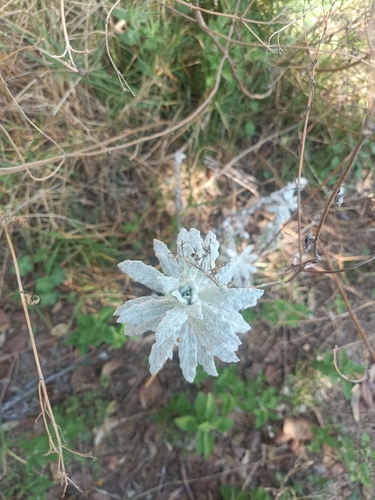 Estafiate / Istafiata
White Sagebrush / Prairie Sage
Artemisia ludoviciana
Aromatic herb, dry rocky slopes
Medicinal use: Leaf tea traditionally used as a digestive and for menstrual regulation. Part used: leaves. ⚠ Contraindicated in pregnancy — abortifacient in high doses. (UNAM Atlas PMTM)
Estafiate / Istafiata
White Sagebrush / Prairie Sage
Artemisia ludoviciana
Aromatic herb, dry rocky slopes
Medicinal use: Leaf tea traditionally used as a digestive and for menstrual regulation. Part used: leaves. ⚠ Contraindicated in pregnancy — abortifacient in high doses. (UNAM Atlas PMTM)
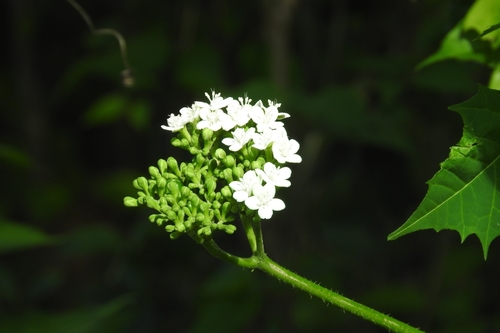 Chaya / Chichicaste
Tree Spinach / Chaya
Cnidoscolus aconitifolius
Leafy shrub, traditional food plant
Medicinal use: Cooked leaves eaten as a nutrient-dense vegetable; traditionally used to support blood-sugar regulation. Part used: cooked leaves. ⚠ Raw leaves contain hydrocyanic glucosides — must be cooked. Maya and Nahua food medicine.
Chaya / Chichicaste
Tree Spinach / Chaya
Cnidoscolus aconitifolius
Leafy shrub, traditional food plant
Medicinal use: Cooked leaves eaten as a nutrient-dense vegetable; traditionally used to support blood-sugar regulation. Part used: cooked leaves. ⚠ Raw leaves contain hydrocyanic glucosides — must be cooked. Maya and Nahua food medicine.
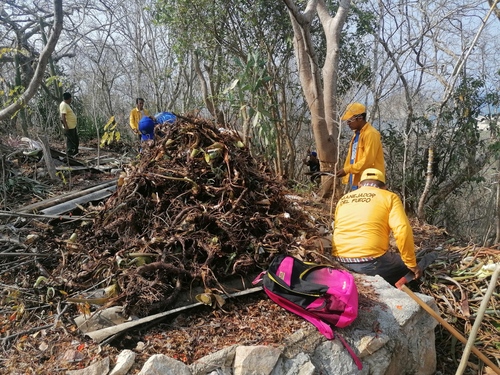 Sábila
Aloe Vera
Aloe vera
Cultivated near homes throughout region
Medicinal use: Leaf gel widely applied for burns, sunburn, and skin irritation. Juice taken internally for gastric inflammation. Part used: leaf gel. One of the most universally documented medicinal plants in Mexican traditional medicine.
Sábila
Aloe Vera
Aloe vera
Cultivated near homes throughout region
Medicinal use: Leaf gel widely applied for burns, sunburn, and skin irritation. Juice taken internally for gastric inflammation. Part used: leaf gel. One of the most universally documented medicinal plants in Mexican traditional medicine.
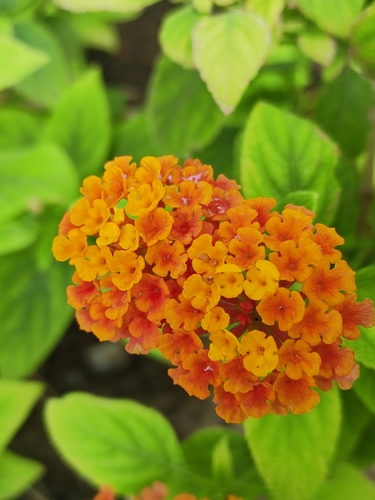 Cinco negritos
Lantana / Shrub Verbena
Lantana camara
Multicolored flowers, dry scrub
Medicinal use: Leaf decoction traditionally used for skin infections and as an anti-itch wash. Part used: leaves. ⚠ Green berries are toxic. (UNAM Atlas PMTM)
Cinco negritos
Lantana / Shrub Verbena
Lantana camara
Multicolored flowers, dry scrub
Medicinal use: Leaf decoction traditionally used for skin infections and as an anti-itch wash. Part used: leaves. ⚠ Green berries are toxic. (UNAM Atlas PMTM)
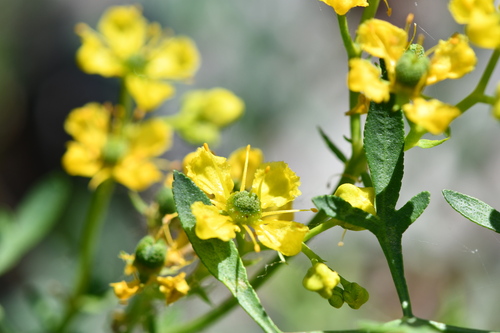 Ruda
Rue
Ruta graveolens
Cultivated herb, culturally significant
Medicinal use: Leaf infusion traditionally used for menstrual complaints and as a ritual cleansing herb. Part used: leaves. ⚠ Contraindicated in pregnancy — potent emmenagogue and abortifacient. Grown in nearly every village herb garden in coastal Guerrero.
Ruda
Rue
Ruta graveolens
Cultivated herb, culturally significant
Medicinal use: Leaf infusion traditionally used for menstrual complaints and as a ritual cleansing herb. Part used: leaves. ⚠ Contraindicated in pregnancy — potent emmenagogue and abortifacient. Grown in nearly every village herb garden in coastal Guerrero.
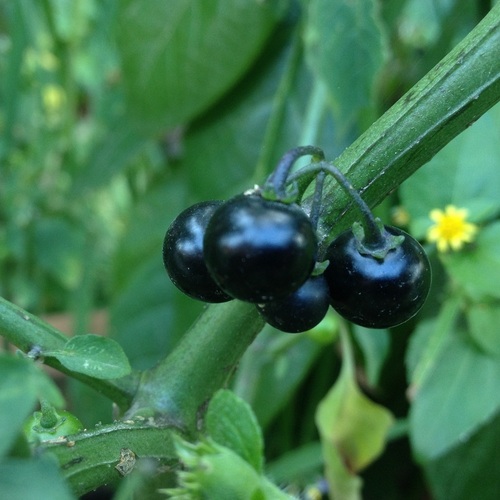 Hierba mora
Black Nightshade
Solanum americanum
Weed of disturbed ground, small fruits
Medicinal use: Leaf poultice traditionally applied for skin inflammations and headaches. Part used: leaves externally. ⚠ All green parts and unripe berries are toxic if eaten — not for internal use. (UNAM Atlas PMTM)
Hierba mora
Black Nightshade
Solanum americanum
Weed of disturbed ground, small fruits
Medicinal use: Leaf poultice traditionally applied for skin inflammations and headaches. Part used: leaves externally. ⚠ All green parts and unripe berries are toxic if eaten — not for internal use. (UNAM Atlas PMTM)
Photos via iNaturalist (CC-licensed). Species grouped by habitat — front-of-estuary mangroves, dry tropical forest behind the village, beach and dune pioneers, and the cacti, fruit trees, and ornamentals that thread through it all. The mangroves are the keystone group: red mangrove builds the front edge with its prop roots, black mangrove the middle with its breathing pneumatophores, and white mangrove the inner brackish zone.
Four mangrove species: red (*Rhizophora mangle*, prop roots at water edge), black (*Avicennia germinans*, pneumatophores on intertidal mudflats), white (*Laguncularia racemosa*, mid-estuary), buttonwood (*Conocarpus erectus*, inland fringe). Behind the beach: tropical dry forest — bare Nov–May, flushing green with first rains. *Bursera* spp., agaves, cacti on rocky outcrops. 670+ species in combined iNaturalist/GBIF records within 25 km.
Recent plant observations
Research-grade plant observations from iNaturalist within 25 km of La Saladita, last 90 days. Photos and identifications by the iNaturalist community.
Top species by GBIF / iNat count
- Amphiroa misakiensisUncommon · Jun–Nov
- Hypnea pannosaUncommon · Jun–Nov
- Caulerpa sertularioidesUncommon · Jun–Nov
- Conocarpus erectusUncommon · Apr
- Cocos nuciferaUncommon · Jan
With 670+ species and 3,645 total records, per-species percentages are all <3% — no species meets the "Common" threshold individually. Dominant group in records: intertidal algae (red algae, green algae), largely from GBIF marine surveys. Terrestrial plants are the everyday visible flora.
November observer bias applies
Raw peak month is November for plants (effort-inflated 6× vs. dry season). Normalized peak shifts to April — consistent with the late dry season / pre-rain flowering window. Per-species monthly counts are not available in the source artifact, so year-round classification is blocked for all individual plant species. The mangroves (red, black, white, buttonwood) are present year-round; that is established by regional ecology, not computed from frequency tags.
The four mangrove species of the estuary

Red mangrove
Rhizophora mangle details → LC → Uncommon in records · year-round presence (ecology) Last reported: via climatologyThe outermost mangrove, growing directly into the water on distinctive arching prop roots. The root network creates underwater habitat — nursery for juvenile fish and refuge for invertebrates. Propagules (torpedo-shaped seedlings) drop and float until lodging in shallow sediment.

Black mangrove
Avicennia germinans details → LC → Uncommon in records · year-round presence (ecology) Last reported: via climatologyIdentifiable by the dense carpet of pneumatophores — pencil-like aerial roots emerging from the mud. Tolerates higher salinity than red or white mangrove. Salt-secreting glands give leaves a crystalline appearance.

White mangrove
Laguncularia racemosa details → LC → Uncommon in records · year-round presence (ecology) Last reported: via climatologyMid-estuary species growing between red and buttonwood zones. Lacks prop roots; smooth, pale-green leaves with two glands at the base of the blade are the clearest ID feature.

Buttonwood mangrove
Conocarpus erectus details → LC → Uncommon · Apr peak · 33 records Last reported: via climatologyInnermost mangrove associate occupying the landward fringe, transitioning into coastal dry forest. Dense canopy provides nesting habitat for herons and egrets. Small cone-like fruits give it its common name. 33 GBIF observations in the area.
Most-observed plant species (2000–2025)
Combined iNaturalist (research-grade) and GBIF records within 25 km of La Saladita. 671 plant species recorded across 3,645 observations. Note that GBIF's kingdom Plantae includes marine algae — the most-counted organisms in this dataset by sheer survey-effort bias; see methodology note below.
Loading species data…
Every documented plant.
The curated cards above are the signatures. Below is the full list — every plant species with a research-grade iNaturalist record within 50 km of La Saladita. Type to filter; tap any card for the full species page.
Loading…
Methodology & sources
- iNaturalist (primary): iNaturalist Observations API, taxon_id=47126 (kingdom Plantae), lat 17.5897°N / lng -101.4317°W, radius 25 km, research-grade quality grade only. Paginated at 200 records per page; 2,150 records loaded. iNaturalist is preferred for plants because records are image-documented and community-verified, making species-level identification more reliable.
- GBIF (supplementary): GBIF Occurrence Search API, taxonKey=6 (kingdom Plantae), bounding box 17.36–17.82°N / -101.68–-101.18°W, years 2000–2025, hasCoordinate=true. iNaturalist-origin GBIF records are excluded (already counted above). 1,495 non-iNat GBIF records loaded. GBIF taxonKey=6 includes marine algae (Rhodophyta, Chlorophyta, etc.) — the observed dominance of algae species in the top-observed list reflects GBIF herbarium survey effort in the marine zone, not their ecological importance relative to vascular plants.
- Deduplication: iNaturalist records propagated to GBIF are counted once (iNaturalist source). Records are tagged by source; duplicates are filtered at the GBIF query stage by excluding records with "inaturalist" in the dataset name.
- Notable groups: Mangrove, palm, cacti, dry-forest, and coastal species lists are curated from published botanical surveys of the Guerrero Pacific coast and are not limited to records in the digital databases. The four mangrove species are documented in herbarium collections from the region.
- Sparse-data policy: If combined observations fall below 20, the page surfaces an explicit warning. With n=3,645 records, the dataset is adequate for species-level frequency analysis, though absolute abundance estimates are not appropriate.
- Recent sightings widget: Calls the live iNaturalist API for research-grade observations within 25 km, last 90 days. Results include photos where available (iNaturalist CC-licensed imagery).
- IUCN status: The four mangrove species listed here are currently Least Concern on the IUCN Red List. Mangroves as a habitat type face ongoing pressure from coastal development and aquaculture; individual species assessments should be consulted for current regional status.
Data last refreshed: —